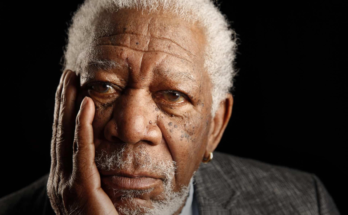
Steve Harvey built a career making people laugh. But one of the most powerful chapters of his life concerns a time when his own future was painfully uncertain.
Long before the television success, recognizable suits, and familiar reactions on Family Feud, Harvey experienced homelessness. He has publicly described living in his car for three years before getting his first major break—a difficult beginning that gives his later achievements a deeper meaning.
His story invites a closer look at what audiences see when they watch a successful entertainer. The confidence on screen is visible. The years spent trying to reach that screen are much easier to overlook.
For Harvey, those years are part of the story he continues to tell.
A Dream Without a Guarantee
Harvey’s official biography describes a childhood ambition to appear on television, despite struggling with a stutter. In 1985, an open-mic performance encouraged him to pursue comedy professionally. The decision opened a new direction in his life, but the road ahead included homelessness and travel in search of performances.
Knowing how his career eventually developed can make that beginning seem like an inevitable first step toward fame. At the time, however, the outcome was still unknown.
That uncertainty matters. A dream can provide direction without providing financial security. Talent can create possibilities without immediately creating a dependable living.
Harvey’s early experience brings those realities into focus. The distance between wanting a career and being able to support oneself through it can be considerable.
The Moment He Considered Walking Away
Harvey has also spoken about reaching a point when he considered abandoning comedy. In a message published on his website, he connected his experience of homelessness with the temptation to give up, encouraging others facing similar crossroads to keep moving forward. Faith is central to the way he explains that decision.
This admission makes his success story more human.
Persistence is often described as confidence that never weakens. Harvey’s account suggests something more complicated: a person can question the path ahead and still decide to take another step.
That does not mean every difficult pursuit will end in fame. It does mean that doubt, by itself, is not proof that someone has nothing left to offer.
For readers facing disappointment, that distinction can be meaningful. Continuing does not always begin with certainty. Sometimes it begins with a willingness to try again.
Building a Career Audiences Would Recognize
Harvey’s work eventually expanded across stand-up comedy, television, radio, and books. His career included Showtime at the Apollo, The Steve Harvey Show, and the Kings of Comedy tour. He began hosting Family Feud in 2010, bringing his comic timing and expressive reactions to a new audience.
These achievements explain why his name became so familiar. They also show how a career can develop through several opportunities rather than one decisive moment.
A breakthrough may open a door, but sustaining a career requires further work. New roles bring different demands, and recognition does not remove the need to adapt.
Seen in that light, Harvey’s rise is more than a transformation in circumstances. It is a career built over time, across different forms of entertainment.
Personal Setbacks Belong in the Story, Too
Harvey’s reflections have also extended beyond financial hardship. A May 19, 2026 episode of One On One with Kris Fade featured discussion of his homelessness, mistakes connected with two marriages, and his understanding of happiness after achieving substantial success, according to the episode’s official description.
Those subjects broaden the picture of his life without requiring speculation about private events.
Professional achievement and personal fulfillment are different measures. A successful career cannot, on its own, explain how someone handles relationships, responsibility, or regret.
There is value in acknowledging both accomplishment and mistakes. Doing so allows a public figure to be understood as a person whose life includes learning, rather than as a polished collection of achievements.
What His Story Offers Readers
One way to read Harvey’s journey is as a reminder that a difficult period does not reveal the whole shape of a life.
Homelessness was a serious part of his history. It was not the only part. Later success became another chapter, alongside personal experiences that deserve their own consideration.
For someone rebuilding after a setback, that perspective can offer hope without pretending recovery is easy. Progress may take time. Help and opportunities matter. Decisions may need to change.
Harvey’s example does not supply a formula that everyone can follow. It does offer a reason to resist judging an entire future by one painful stage.
The laughter made Steve Harvey famous. His willingness to discuss the years before fame gives audiences something else to consider: the effort behind the confidence, the uncertainty behind the ambition, and the person behind the public success.